Even the most insulated consumer of global media must be aware, by now, that the Earth’s twin poles, north and south, are in terrible trouble. And so, as a consequence, are we.
The scientific proof is overwhelming that man-made carbon emissions have thrown the planet into an untimely warming cycle that, so far, has raised its average temperature by more than a degree Celsius. According to the World Meteorological Office the present heatwave in the oceans and atmosphere puts us on track to exceed 1.5 degrees – the level governments worldwide vowed not to exceed – for the first time in human history by 2027. [1]
For the planet’s ‘airconditioner’, the polar regions, the prognosis is even grimmer. Spot temperatures in recent years have soared 30 and even 40 degrees above normal, triggering massive decay of the icecaps and unleashing a whole slew of new threats for humans to worry about. These include:
- Loss of the water that sustains billions of people, caused by the melting of mountain glaciers
- The risk that melting tundra and seabed methane could release the ‘sleeping giant’ of global warming, frozen carbon, doubling the amount now heating the planet
- Accelerating loss of sea ice in both Arctic and Antarctic, to the lowest levels ever seen. This leads to more dark, open ocean which also accelerates the rate of heating.
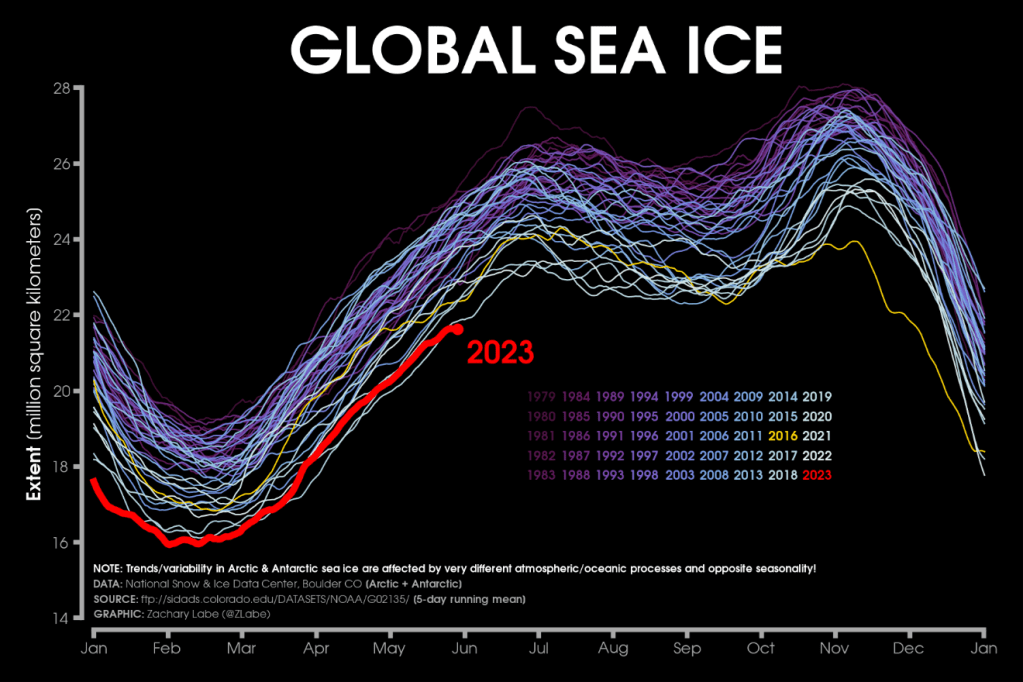
- Polar melting adds 420 billion tonnes of new water to the oceans a year, doubling the measured rate of sea level rise to 4.6mm/year, placing many small island nations under direct threat.
- Increased risks of rockslides, avalanches and glacial outbursts in mountainous countries.
- Slowing and possible breakdown in the vast undersea currents that regulate heat dispersal around the planet, leading to more dangerous weather patterns – floods, fires, droughts and hurricanes – impacting on the world food supply. [2]
- Breakdown in the northern polar Jetstream, leading to more violent local storms and floods.
The point about all this is that what happens at the poles doesn’t stay at the poles. It spreads out to embrace the entire planet, everyone and everything on it. There is already a significant chance that the Arctic will be ice-free in summer by 2040, and a possibility the whole Earth could become virtually ice-free within a century – something that hasn’t happened for around 34 million years. A global food system that depends on a temperate climate will not survive.
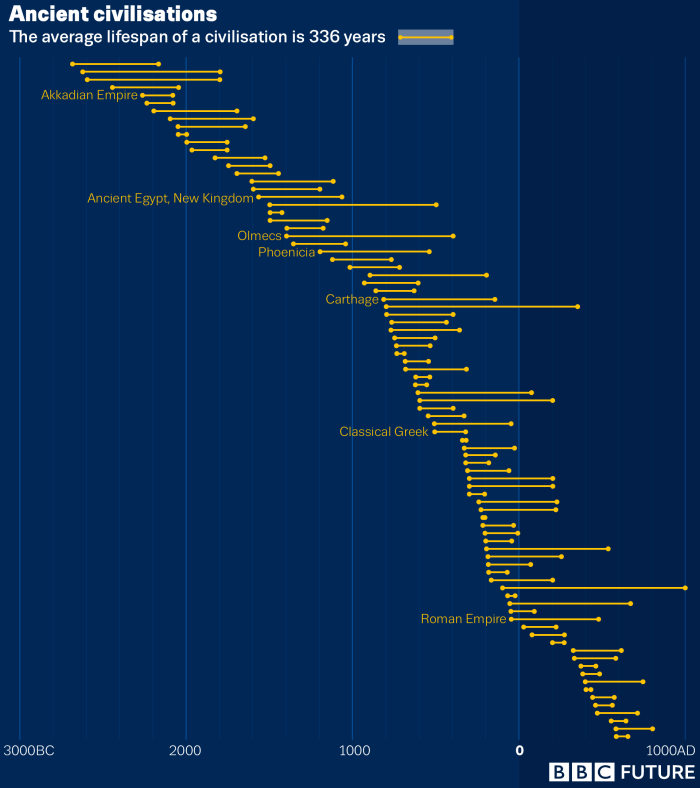
Like human bipolar disorder, where the patient’s moods swing from one extreme to another, planetary bipolar disorder will set the parameters for human survival (food, water, heat, cold, fire, flood) on a chaotic path to Hothouse Earth, disintegrating communities, governments, nations. History has many stark reminders of what happens when civilizations outrun their resources – as all eventually do.
The irony of the Earth’s present ‘bipolar’ condition is that humans appear to have caught it as well. The collective human mind swings between the poles of acknowledging we are in deep trouble – and denying it, to ourselves and others.
The real danger in this universal mental condition is not posed by the overt denialists, paid stooges and ‘useful idiots’ of the $7 trillion global carbon lobby. They are easily ignored. The true danger lies in ‘soft denial’, of the kind being practised by governments and global corporates the world over.
Faced with the undeniable and escalating impacts of global heating and polar decline on the nightly media, governments, corporate executives and shareholders are quietly turning their faces away, saying to themselves “We don’t want to believe our world is disintegrating, so we’ll pretend it isn’t. And we’ll keep on mining fossil fuels, clearing land and overpopulating the planet till the truth is undeniable.” It’s a form of self-imposed, collective insanity.
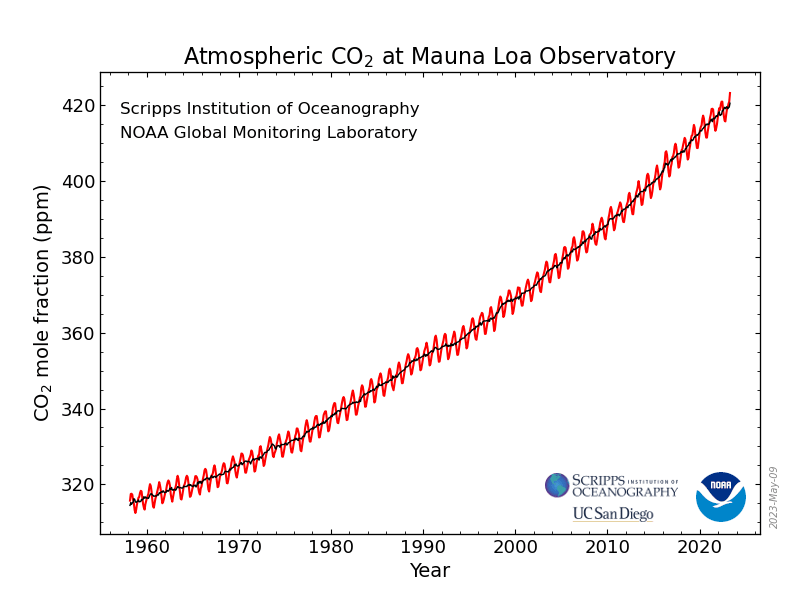
The governments of the United States, Britain, Canada, Australia, Russia, Brazil, India and China – to name just a few – are masters at mouthing the platitudes of climate action, and then quietly opening new oil and gasfields, coal mines or tar sands, hoping nobody will notice or keep track of the emissions. Their disingenuousness is exposed in the fact that world atmospheric carbon levels continue to rise steeply, despite all the promises made to cut them.[3]
Do these governments seriously want to encompass the deaths of billions of human beings, which are the inevitable consequence of their present policies? Perhaps not. So they just pretend to themselves it isn’t happening – and then lie to their electors and shareholders to buy themselves more time to do little or nothing about it. This form of ‘soft denial’ – or self-delusion – will be far more lethal in the long run than any amount of pro-carbon propaganda because it will postpone effective action until it is too late to act.
Thus we see both planet and people stricken by bipolar disorders – one of the physical Earth, and one of the human mind.
Is there any way out of the trap? The answer is yes, by ceasing to use fossil fuels in all forms, as soon as possible. By having far fewer children. By consuming and travelling far less. By adopting a circular global economy that reuses, instead of wasting and polluting. By producing renewable food as well as renewable energy. The details are summarised in ‘How to Fix a Broken Planet’.
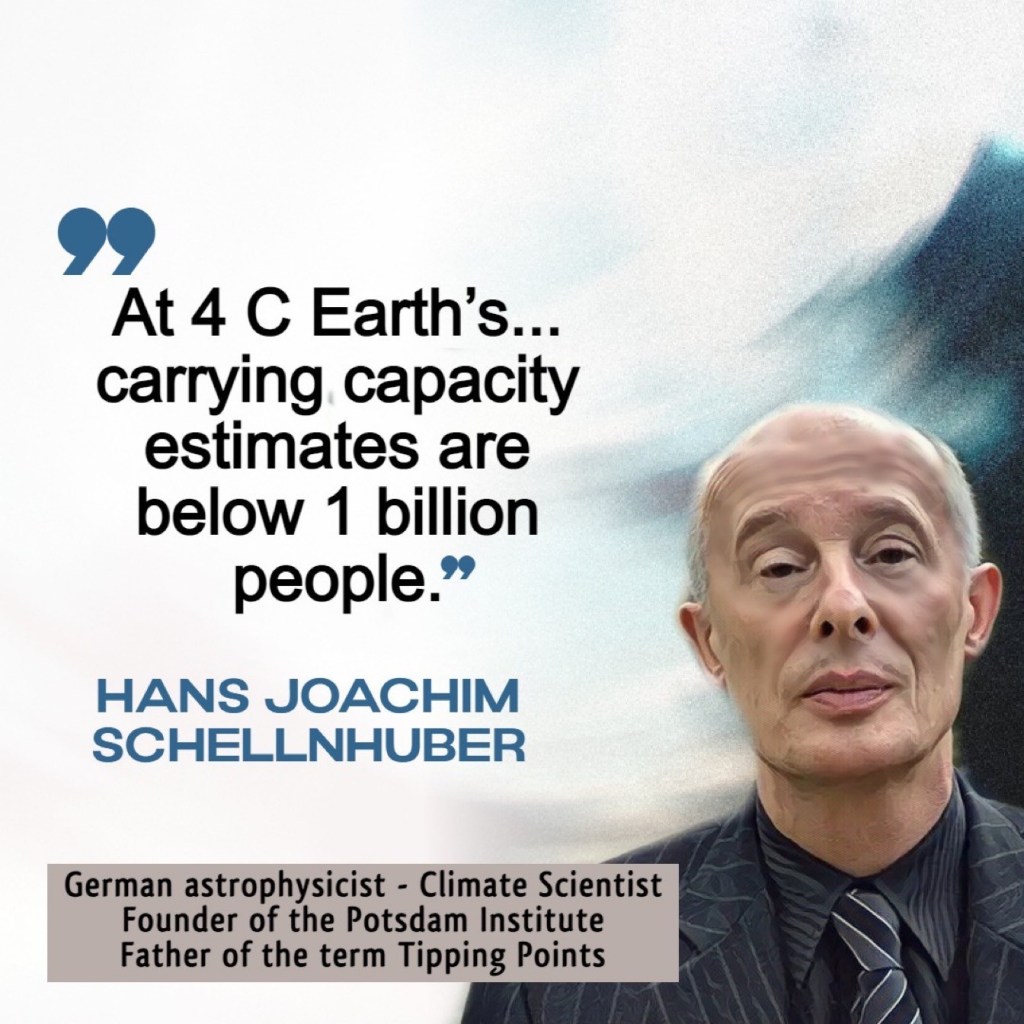
The longer we leave things, the more damage we will do to our civilisation and the higher the probability of its collapse, as the UN has already warned us. [4] Collapse is the current policy direction of most governments – and they need to be jerked out of their state of ‘soft denial’. If the Earth’s temperature reaches +3-4 degrees, not only will we lose the icecaps but global food and water supplies will break down completely and – according to some estimates, 90% of the population will perish.
There exists a golden opportunity to lead humanity out of its current death-spiral, by adopting an Earth System Treaty in the UN – a legal compact which everyone can sign, committing ourselves to work together for a human-habitable Earth that hosts a rich array of other life.
On World Environment Day, we need to recognise the Earth is a lifeboat. We can either row it to safety together, or go down together. That’s why we now need a World Plan of Action for Human Survival. [5]
Ends
- Julian Cribb AM is an Australian science writer and author of six books on the human existential emergency. His latest book is “How to Fix a Broken Planet” (Cambridge University Press, 2023
[1] https://www.ecogeneration.com.au/global-temperature-to-rise-above-1-5c-threshold-in-next-five-years/
[2] https://theconversation.com/antarctic-alarm-bells-observations-reveal-deep-ocean-currents-are-slowing-earlier-than-predicted-206289
[3] https://www.theguardian.com/environment/2023/apr/06/greenhouse-gas-emissions-noaa-report-us-data
[4] UN, Global Assessment Report on Disaster Risk Reduction. May 2022. https://www.undrr.org/publication/global-assessment-report-disaster-risk-reduction-2022
[5] A World Plan of Action for Human Survival. https://www.youtube.com/watch?v=US57cV1gJZg
 Surviving C21
“…way out of the trap.” Yes, but we are not going to do anything. No officials are urging us to take action, and nobody else is doing so. Everything is fine…except for those relatively few who are up to their chests in flood waters and have lost what little they had…but, they are poor people far away…who cares. WE are fine. Even when the time comes that we aren’t, we will go on as much as usual as we can. We are not going to back down on our splashed-out lives, no way….Nor is anyone else. A few of us will remember what you said, far, far too late. And, Mother Nature will bat last!
LikeLike
Some people ARE doing something. Climate activists are blocking the ports and the railways and the bridges and the freeways, in a symbolic attempt to slow down the entire economy to the point where the natural world can catch up. The state is determined to stamp out all forms of climate action that is effective at disrupting our daily lives for even the briefest of moments; 2 years in gaol and/or a $50,000 fine for ‘obstructing traffic.’
Things are definitely heating up around here.
LikeLiked by 1 person
In The New Yorker recently Elizabeth Kolbert wrote that at the Earth summit in Rio de Janiero in 1992, the leaders of the world pledged solemnly, hands-on-hearts, to drastically reduce carbon emissions. But here we are some 30 years later and emissions are still rising at the same steady inexorable rate. In fact we have produced more emissions since 1992 than all of the previous 30,000 years put together.
In 1992 our energy mix was about 20% renewables and 80% fossil fuels.
Despite enormous growth in the production of renewable energy, that ratio has barely changed. That is because the world economy has grown at roughly the same rate as renewable energy, so we have got nowhere at all.
It is probably impossible to cut emissions and grow the economy at the same time,
and it is probably impossible for Capitalism to function without a growing economy.
The obvious and simple way to combat climate change is to reduce the size of the economy by ditching the present system and inventing an entirely new one.
Not only is it the obvious way, I think it is the only way. We have no choice!
So how do we combat climate change, whilst simultaneously reducing GDP?
We take money out of the equation. We do what needs to be done because it is necessary, and we do it for free, just as others are fulfilling our basic needs for free.
Mutual obligation. Quite simple really, when you think about it. But don’t think about it too much, because the more you think about it, the more complex it becomes.
LikeLiked by 1 person
“The true danger lies in ‘soft denial’” …
Julian, you make some great points here — thank you. I would add that soft denial can be practiced by governments and corporations only because too many people practice it in their daily decision making. Just in a phone conversation with an old college friend yesterday, as he offered up the usual (and tired) bromides of “climate is always changing,” and “climate is a political issue (so let’s not go there)”, I thought: there it is again.
As a teacher, I am reminded every day that while education offers the opportunity of more wealth, it does not seem to confer proportional critical thinking when it comes to recognizing the causal relationship between one’s personal embrace of a fossil fuel-enabled lifestyle, to climate change. It is possible, in other words, for people in whom society (or somebody) has invested tens or maybe hundreds of thousands of dollars to educate, whose CO2 footprint is four times the the global average, to claim, and perhaps even believe, that (in the words of my college pal), “if only China and India got their act together, we’d be OK.” Justifying, of course, what he really wants, which is to limit his fossil fuel-enabled choices not one little bit, nowhere and at no time. So it’s just fine to take that vacation to Maui, it’s the Chinese’s fault.
Repeat ad nauseum, including (and more egregiously) my PhD-holding colleagues. I have come to believe that it is this ubiquitous, middle-to-upper class soft denialism that enables the denialism of those in positions of corporate or government power; and until they (we) grow up, nothing will change.
LikeLike